
Views: 0 Author: Site Editor Publish Time: 2026-06-18 Origin: Site


Cold chain logistics is not just about moving goods—it’s about protecting temperature-sensitive products at every step. During loading and unloading, the warehouse door is open, creating a direct connection between indoor and outdoor environments.
If this process is slow or unstable, cold air escapes quickly and warm air enters. This increases energy consumption and may damage sensitive goods such as food, pharmaceuticals, and frozen products.

Every second the dock door remains open increases temperature fluctuation. Over time, this leads to higher operating costs and reduced system efficiency.
Dock levelers help speed up loading, reducing door open time and minimizing cold air loss. This directly improves temperature control and supports stable cold chain conditions.
Cold environments affect mechanical systems. Oil thickens, materials become brittle, and performance may drop.
Dock levelers designed for cold storage use special materials and low-temperature systems to ensure stable operation, even under freezing conditions.
Dock levelers do more than bridge a height gap. They create a smooth and controlled loading process.
They allow forklifts to move efficiently between the dock and truck, reducing delays and improving safety.
Faster loading means less exposure to outside temperatures. This is especially important in cold storage, where even short delays can impact internal conditions.
Dock levelers enable quick truck alignment and continuous material flow, helping reduce idle time and improve loading efficiency.
Uneven surfaces between the dock and truck can cause vibration, instability, and product damage.
Dock levelers provide a stable and level surface, allowing forklifts to move safely and smoothly, even during heavy-duty operations.
Cold storage warehouses often operate under high frequency and pressure.
Dock levelers provide a secure working platform that reduces risks such as slipping, sudden drops, or misalignment during loading.
Dock levelers used in cold storage warehouses must meet higher requirements than standard loading equipment. They need to ensure stable performance under low temperatures, reduce air leakage, and support efficient, high-frequency loading operations.
Different types of dock levelers are designed to meet various operational needs. Understanding their differences helps in selecting the right solution for cold chain environments.
Hydraulic dock levelers are the most widely used option in cold storage facilities due to their smooth operation and high efficiency. They use a hydraulic system to lift and lower the platform, allowing precise control with minimal manual effort.
In cold environments, hydraulic systems can be equipped with low-temperature oil to ensure stable performance. This type is ideal for high-frequency loading operations where speed, reliability, and safety are critical.

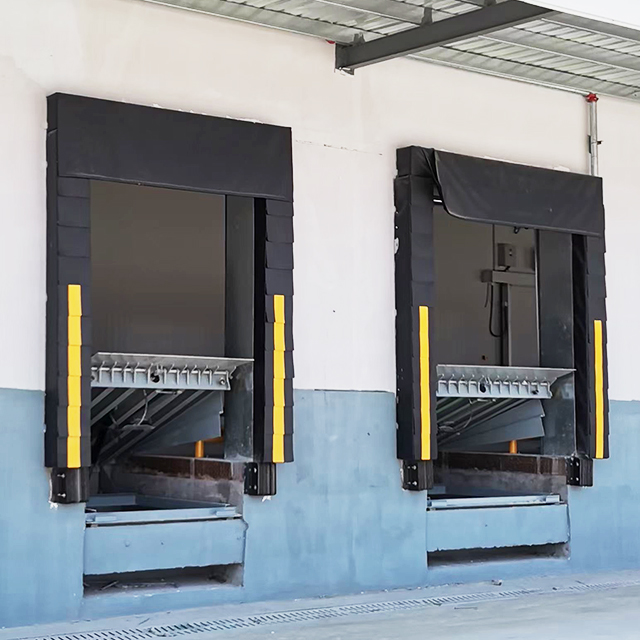
Mechanical dock levelers operate manually using spring or pull-chain systems. They are simple in structure and do not require an external power source.
While they are cost-effective and suitable for low-frequency applications, they are less efficient in cold storage environments. The manual operation can slow down loading speed, which may lead to increased door open time and higher temperature loss.


Telescopic dock levelers feature an extendable lip that allows better reach into the truck bed. This design helps create a tighter and more precise connection between the dock and the vehicle.
In cold storage applications, this improved contact reduces gaps and minimizes cold air leakage. It is especially useful when handling trucks with different heights, providing better flexibility and sealing performance.


Vertical dock levelers are designed to be stored in an upright position when not in use, keeping the dock pit completely closed.
This feature is highly beneficial in cold storage warehouses, as it allows better sealing when the dock is idle. It helps maintain internal temperature, improves hygiene, and prevents debris or moisture from entering the pit area.


Edge of dock levelers are mounted directly on the dock edge rather than installed in a pit. They are compact and easy to install, making them suitable for facilities with limited space.
Although they are generally used for light to medium-duty operations, they can still be applied in cold storage where space constraints exist. However, their sealing performance is not as strong as pit-type levelers.


Air bag dock levelers use an air-powered system to raise and lower the platform. This eliminates the need for hydraulic oil and reduces the risk of leakage.
They offer fast response and relatively low maintenance, making them suitable for specific applications. In cold storage environments, they can perform well if properly designed for low-temperature operation.


Advanced dock levelers include features specifically designed for cold storage environments.
Sealing performance is one of the most critical factors in cold storage loading operations. Even small gaps between the truck and dock can lead to significant cold air loss and increased energy consumption.
Dock levelers designed for cold chain applications are often equipped with advanced sealing systems that help maintain a stable internal environment and reduce temperature fluctuations during loading.
Dock seals and shelters create a tight enclosure around the truck when it is positioned at the dock. This minimizes the gap where cold air can escape and prevents warm air from entering the warehouse.
In high-frequency loading environments, proper sealing not only protects product quality but also significantly reduces energy costs over time.
Side curtains and top seals provide flexible sealing for different truck sizes. They adjust to vehicle dimensions, ensuring consistent protection regardless of loading conditions.
These components help prevent airflow leakage from the sides and top, improving insulation performance and supporting efficient cold storage operation.
Thermal insulation plays a key role in reducing energy loss during loading. Without proper insulation, the dock leveler itself can become a source of heat transfer.
Modern dock levelers are designed with insulation features that help maintain the temperature difference between indoor and outdoor environments.
Thermal break structures are engineered to reduce heat conduction through the platform. This prevents direct transfer of external heat into the cold storage area.
By minimizing thermal bridging, these designs help maintain stable internal temperatures and improve overall energy efficiency.
A well-designed dock leveler reduces gaps between the platform and the truck bed. This helps limit the amount of air exchanged during loading.
Less air exchange means better temperature control, lower energy consumption, and improved cold chain performance.
Cold environments can significantly affect hydraulic systems and material performance. Standard systems may slow down or become unreliable under freezing conditions.
Dock levelers for cold storage are equipped with anti-freeze hydraulic systems and cold-resistant materials to ensure stable operation.
Standard hydraulic oil becomes thicker in low temperatures, which can slow down system response.
Low-temperature hydraulic oil maintains proper viscosity, allowing smooth lifting and lowering even in freezing conditions, ensuring continuous operation.
Cold-resistant materials prevent cracking, stiffness, and performance degradation under low temperatures.
Using these materials improves durability and ensures long-term reliability in demanding cold storage applications.
Thermal insulation plays a key role in reducing energy loss during loading. Without proper insulation, the dock leveler itself can become a source of heat transfer.
Modern dock levelers are designed with insulation features that help maintain the temperature difference between indoor and outdoor environments.
Thermal break structures are engineered to reduce heat conduction through the platform. This prevents direct transfer of external heat into the cold storage area.
By minimizing thermal bridging, these designs help maintain stable internal temperatures and improve overall energy efficiency.
A well-designed dock leveler reduces gaps between the platform and the truck bed. This helps limit the amount of air exchanged during loading.
Less air exchange means better temperature control, lower energy consumption, and improved cold chain performance.
Safety becomes even more important in cold storage environments, where moisture and ice can create slippery conditions.
Dock levelers are designed with enhanced safety features to protect operators and equipment during loading.
Checkered steel plates provide increased friction, helping forklifts maintain traction even in wet or icy conditions.
This reduces the risk of slipping accidents and ensures safe material handling.
Side guards prevent forklifts from moving off the edge of the platform, reducing the risk of accidents.
Safety lips create a stable transition between the dock and truck, improving both safety and loading efficiency.
Modern dock levelers are often integrated into a complete loading dock system, working together with other equipment to improve efficiency.
This integration helps create a more controlled and automated loading process.
Dock levelers can be synchronized with high speed doors to ensure that doors open only when loading is ready to begin.
This reduces unnecessary exposure to external temperatures and improves energy efficiency.
Safety interlock systems coordinate multiple devices to prevent incorrect operation.
They ensure that loading only starts when the dock leveler, door, and vehicle are properly aligned and secured.
The lip design plays a key role in how effectively the dock leveler connects with the truck.
A well-designed lip improves both operational efficiency and sealing performance.
Telescopic lips extend forward smoothly and allow precise positioning on the truck bed.
Compared to swing lips, they provide better contact and reduce gaps, improving sealing performance.
A properly designed lip minimizes air leakage between the dock and the truck.
This helps maintain internal temperature and improves overall loading efficiency in cold chain operations.
Reducing air leakage is essential for maintaining cold chain integrity and controlling energy costs.
Dock levelers contribute to this by improving sealing, alignment, and overall system efficiency.
A precise fit between the dock leveler and truck reduces the size of gaps during loading.
This directly lowers air exchange and helps maintain stable internal temperatures.
Improved sealing and reduced air leakage lead to lower energy consumption over time.
For cold storage facilities, this results in significant cost savings and more sustainable operations.
Proper installation and regular maintenance are essential to ensure dock levelers perform reliably in cold storage environments. Since these systems operate under low temperatures and high-frequency conditions, even small installation errors or lack of maintenance can lead to energy loss, reduced efficiency, and potential safety risks.
A well-installed dock leveler should align precisely with the dock structure, door system, and sealing components. This ensures minimal gaps during operation, which is critical for maintaining temperature control and reducing cold air leakage. Professional installation also helps optimize load capacity, stability, and overall system integration.
Installing dock levelers in cold storage requires more than basic positioning. It involves proper coordination with dock seals, shelters, and door systems to create a fully sealed loading environment.
Accurate pit construction, correct platform alignment, and proper sealing integration are key factors. When installed correctly, the dock leveler can significantly improve loading efficiency while maintaining internal temperature stability.
Cold environments can accelerate wear on hydraulic systems, seals, and structural components. Without proper maintenance, performance may decline over time.
Routine inspections and preventive maintenance help ensure consistent operation, reduce downtime, and extend equipment lifespan.
Hydraulic systems should be checked regularly to ensure proper pressure, responsiveness, and oil condition.
Using low-temperature hydraulic oil and maintaining correct fluid levels are essential to prevent slow operation or system failure.
Sealing components and insulation materials should be inspected for wear or damage.
Maintaining proper sealing performance helps reduce air leakage and improves overall energy efficiency in cold storage operations.
Safety features such as locking mechanisms, sensors, and control systems should be tested periodically.
This ensures safe operation and prevents accidents during high-frequency loading activities.
The platform structure, hinges, and lip components should be checked for wear, deformation, or damage.
Regular maintenance ensures long-term durability and stable performance under heavy-duty conditions.
Dock levelers are essential for maintaining efficiency and temperature control in cold storage warehouses. They help reduce cold air loss, improve loading speed, and ensure safe operations during daily use.
With the right design and proper maintenance, dock levelers can significantly improve cold chain performance while reducing long-term energy and operational costs. For any cold storage facility, investing in the right dock leveler system is a practical and valuable decision.


